Entri Populer

Greenomics Indonesia Open Statement in Response to Interview with Scott Poynton in REDD-Monitor


First of all, we at Greenomics Indonesia would like to express our appreciation to Chris Lang (REDD-­Monitor) for posing important questions arising from Greenomics Indonesia reports to Scott Poynton (Executive Director of TFT) in an interview that was carried by redd-monitor.org on 23 August 2012. The questions put by Chris Lang are key questions based on Greenomics Indonesia reports on the agreement between TFT and GAR. Chris Lang provided space in REDD-Monitor for Greenomics Indonesia’s views when we strongly criticized the collaboration between TFT and GAR. We are thankful therefore for the support that has been provided by Chris Lang and REDD-Monitor.
Greenomics Indonesia now feels called upon to respond to the points raised by Scott Poynton in the said his constructive and productive comments on the Greenomics Indonesia reports, particularly the report of our investigation into the first year of operation of the collaboration agreement between TFT-­GAR in respect of three GAR concessions in West Kalimantan Province.
In Greenomics Indonesia’s view, the points set out herein need to be raised for the purpose of clarifying what was said in the interview.
  • The criticism levied by Greenomics Indonesia against the TFT-­GAR Agreement is not based on antipathy on the part of Greenomics Indonesia to the agreement, but rather the need to have regard to a report by the Indonesian State Audit Board stating that the greater part of GAR palm concessions in Central Kalimantan Province are located in areas that are legally designated as forestland. Greenomics Indonesia’s criticism is therefore not based on the perceptions, or indeed prejudice, on the part of our organization, but rather on an audit report issued by the Indonesian State Audit Board.
  • We also need to avail of this opportunity to update TFT and Greenpeace about the latest report from the Indonesian State Audit Board (2012), which is based on samples of legal violations of forestry law by palm companies in Central Kalimantan Province. This report states that 3 of the 17 palm companies found to have committed legal violations are actually GAR companies. The report also reveals that GAR has palm concessions blocks that are located in designated forest zones based on the Central Kalimantan spatial plan. This means that these GAR palm concession blocks are operating in violation of the Central Kalimantan government’s own spatial plan. Consequently, it will be clear that Greenomics Indonesia’s criticisms continue to be highly relevant, namely, even based on the Central Kalimantan spatial plan, GAR still operates palm concession blocks that are located within designated forest areas. TFT and Greenpeace need to take head of these serious legal violations.
  • Clear legal evidence that the bulk of GAR palm concessions in Central Kalimantan Province are located on land that is legally designated as forestland is provided by Government Regulation No. 60 of 2012, which was signed by President Susilo Bambang Yudhoyono on 6 July 2012. This Government Regulation proves that Greenomics Indonesia’s criticism of the TFT-GAR Agreement is well-founded and valid from the legal perspective. The President’s signature on this Government Regulation clearly shows that the majority of GAR palm concessions in Central Kalimantan are sited on legally designated forestland and therefore require forestland relinquishment permits. The issuance of this Government Regulation proves beyond doubt that the Greenomics Indonesia criticism of the TFT-GAR Agreement is more than just an exercise in cynicism.
  • One of the proofs that Greenomics Indonesia is not acting cynically in respect of the TFT-GAR Agreement is that fact that following the issuance of Government Regulation No. 60 of 2012, Greenomics Indonesia took the initiative of holding discussions with the President Director of PT Smart Tbk, Daud Dharsono. PT Smart is the GAR subsidiary that manages all of the GAR concessions in Indonesia, including those operating in Central Kalimantan. The said discussions were intended to ascertain the extent to which the GAR concessions can obtain forestland relinquishment permits following the issuance of Government Regulation No. 60. It is found that thanks to Government Regulation No. 60, forestland relinquishment permits can be obtained by GAR in respect of palm concessions located in convertible production forest, by paying compensation for timber that had been cleared without the obtaining of timber clearing permits. Meanwhile, for GAR concessions in permanent production forest, the GAR concessions can obtain forestland relinquishment permits by providing substitute land to be set aside as permanent production forest and paying compensation for timber that had been cleared without the obtaining of timber clearing permits.
  • TFT, Greenpeace and GAR should pay close attention to this Government Regulation bearing in mind that it represents the position of the President of the Republic of Indonesia and is highly relevant to the legal reality that the majority of GAR palm concessions in Central Kalimantan Province continue to be legally designated as forestland.
  • Scott Poynton stated in his interview with REDD-Monitor that “We made maps with Greenpeace and areas were marked ‘Go’ and ‘No-­‐Go’”. This statement shows that TFT and Greenpeace played key roles in determining the areas that could be cleared and those that could not on the GAR concessions. In its report, Greenomics Indonesia investigated three GAR concessions in West Kalimantan Province, and revealed that in the interests of forest conservation, changes were made in the areas designated for clearance so as to avoid clearing natural forest that was still relative intact and connected with relatively extensive forest blocks. From the conservation perspective, such choices were correct.
  • However, these conservation choices nevertheless violated forestry law as the changes in the locations to be cleared were not accompanied by revision of the relevant timber clearing permits (IPK). Under forestry law, the punishment for this is a fine of 10 times that amount of forestry royalties that have been paid to the state. Bearing in mind that TFT and Greenpeace played an instrumental role in determining the “Go” and “No-Go” areas for land clearance, accordingly TFT and Greenpeace have a legal responsibility to ask GAR to pay such a fine.
  • The payment thereof should be seen as proof of a high level of commitment to the GAR forest conservation program and a willingness to transfer land clearance from blocks that have relatively intact forest cover to locations that are considered as no longer capable of supporting the forest conservation program, notwithstanding the obligation to pay a fine. This would set a good example for other palm oil companies operating in Indonesia. However, if the fine were not to be paid by GAR, this would by contrast set a bad precedent. In fact, both TFT and Greenpeace could be seen as promoting violations of forestry law. Accordingly, this legal responsibility to encourage GAR to pay the fine should be discharged as expeditiously as possible. Greenomics Indonesia has already informed Daud Dharsono that it would be more than willing to provide input and technical facilities to hold the company fulfill its duty to pay the fine. This also shows that Greenomics Indonesia is not acting cynically as regards the TFT-GAR Agreement.
  • Greenomics Indonesia has also exposed a number of GAR palm operations that are located within designated forest areas in South Kalimantan Province. The report in question is serious and far from being an exercise in cynicism aimed at the TFT-GAR Agreement. Rather, it represents an attempt by Greenomics Indonesia to remind TFT and Greenpeace that the TFT-GAR Agreement has the potential to give rise to legal action against GAR palm concessions located in designated forest areas. As an update for TFT and Greenpeace, top GAR/PT Smart executive responsible for the management of GAR palm concessions in South Kalimantan Province have been detained by the police and are being processed according to law, primarily in connection with GAR’s operation of palm concessions located on designated forestland. It would be far-fetched indeed to claim that the police moves in this respect are also motivated by cynicism towards the TFT-GAR Agreement.
  • Greenomics Indonesia firmly believes that sustainability must be brought about in line with the relevant legal parameters so as to ensure best practice. Sustainability must not be used as an excuse for failing to respect legal rules and boundaries.
In conclusion, Greenomics Indonesia would like to once again express its sincere appreciation to Chris Lang and Scott Poynton for, among other things, discussing the Greenomics Indonesia reports related to the TFT-GAR Agreement in the REDD-Monitor interview. Greenomics Indonesia believes that the GAR Forest Conservation Program has the potential to serve as an excellent example for the development of the palm oil industry in Indonesia, particularly on Borneo Island. But first, the problems related to licensing in Central Kalimantan, the issue of fines in West Kalimantan and the overlapping of GAR palm concessions in South Kalimantan will all need to be resolved as expeditiously as possible.
Source : redd-monitor.org

REDD and markets from Rainforest Foundation UK


A new briefing by the Rainforest Foundation UK argues against creating an international carbon market to finance REDD. The briefing is released just before a UN meeting in Bangkok, that will discuss potential options for financing REDD.
The policy briefing, which is available below, is structured around five main critiques of trading forest carbon:
1. It is highly questionable whether a forest carbon market will reduce the cost of tackling climate change or generate billions for forest protection.
2. The proposed forest carbon market is distorting ‘readiness’ preparations for REDD so that they are more focused on creating a tradable asset than outcomes that are beneficial for forests, forest peoples and biodiversity.
3. The ownership of forest carbon – the underlying asset of the proposed market – is contested and unclear, and its trade is particularly susceptible to fraud.
4. Potential REDD emissions reductions credits may not represent genuine reductions in greenhouse gas emissions, due to inflated baselines and leakage. Trading them in an offset market could lead to increased total global carbon emissions, and prolong existing heavily polluting activities.
5. Alternative financing options and approaches exist and are viable. The briefing “warmly welcomes” the fact that governments and high-level decision-makers are increasingly recognising the importance of tropical rainforests and that, “they have begun, albeit patchily, to take action to reduce the level of forest destruction.” However, relying on carbon trading to finance REDD, “is likely to be costly, inefficient and may be counter-productive”. Rather than relying on REDD to address climate change, the briefing recommends turning to the source of the problems, by:
reducing greenhouse gases in industrialised countries; tackling unsustainable consumption and the drivers of deforestation in the global north and south; and focusing on enablers like equitable land tenure, good governance, full and effective participation and the respect of forest peoples’ rights.
Below is Rainforest Foundation UK’s press release about the briefing: ‘Rainforest Roulette’?: Carbon markets might do more harm than good for efforts to tackle deforestation and climate change
Rainforest Foundation UK Press release, 28 August 2012
London – Using markets to try and keep carbon stored in the world’s forests might be a dangerous mistake, according to a new report published by the Rainforest Foundation UK today[1], as governments prepare to meet later this week for a new round of negotiations on funding for climate mitigation, including for reducing emissions from deforestation and degradation (‘REDD’)[2].
Key findings of the report are that:
A forest carbon market may increase rather than reduce the cost of tackling climate change;
Legal reform under REDD tends to favour carbon traders and not forest communities;
Ownership of the carbon stored in forests is contested, unclear and susceptible to fraud;
A forest carbon market might not reduce greenhouse gas emissions due to major design loopholes;
Alternative, more cost-effective, ways of reducing deforestation, and for raising the necessary funds, exist and are viable.
“Instead of protecting forests, the use of carbon markets will mostly protect the interests of heavily polluting companies, which would be able to carry on polluting, whilst their payments to offset emissions in poor tropical forest countries will probably be very inefficient and ineffective,” said Simon Counsell, Executive Director of the Rainforest Foundation UK and one of the authors of the report.
UN negotiations taking place in Bangkok from August 30th aim to agree on a global mechanism to finance the protection of forests in poor countries. Many governments and the private sector favour the use of carbon markets[3]. The authors compare this potential decision to betting the future of the rainforest on a game of roulette.
“With the global carbon markets already in crisis, and after a number of high-profile scams involving forest carbon, choosing the market-based approach would be a very risky bet for protecting forests, when there are viable alternatives on the table”, said Nathaniel Dyer, Policy Advisor for the Rainforest Foundation UK.
The report suggests that efforts to restrict imports of illegal timber, improvements in forest governance, and giving recognition to the land rights of people living in the forests, would be more successful.
Contacts: Simon Counsell: simonc@rainforestuk.org Nathaniel Dyer: natd@rainforestuk.org RFUK office: 020 7485 0193
Notes to editors:
[1] Rainforest Roulette? Why creating a forest carbon offset market is a risky bet for REDD is published by Rainforest Foundation UK on August 28th, and is available at http://bit.ly/TsltM2
[2] Deforestation and forest degradation are estimated to contribute around 12% of global man-made greenhouse gas emissions. More than 40 national governments are in the process of creating national REDD (reducing emissions from deforestation and forest degradation) strategies.
[3] As part of the on-going UNFCCC negotiations, a meeting on the “financing options for the full implementation of results-based actions relating to REDD-plus, including modalities and procedures for financing these results-based actions” is taking place at the United Nations Conference Centre (UNCC) in Bangkok, Thailand from 30th August 2012. Further details are available here: http://tinyurl.com/92o76cd
The Rainforest Foundation UK (RFUK) was founded in 1989. The mission of the Rainforest Foundation UK is to support indigenous peoples and traditional populations of the world’s rainforest in their efforts to protect their environment and fulfil their rights to land, life and livelihood.
Source : redd-monitor.org

Forest Razing by Ancient Maya Worsened Droughts, Says Study


For six centuries, the ancient Maya flourished, with more than a hundred city-states scattered across what is now southern Mexico and northern Central America. Then, in A.D. 695, the collapse of several cities in present day Guatemala marked the start of the Classic Maya's slow decline. Prolonged drought is thought to have played a role, but a study published this week in the journal Geophysical Research Letters adds a new twist: The Maya may have made the droughts worse by clearing away forests for cities and crops, making a naturally drying climate drier.
"We're not saying deforestation explains the entire drought, but it does explain a substantial portion of the overall drying that is thought to have occurred," said the study's lead author Benjamin Cook, a climate modeler at Columbia University's Lamont-Doherty Earth Observatory and the NASA Goddard Institute for Space Studies.
More than 19 million people were scattered across the Maya empire at its height, between A.D. 250 and A.D. 900. Using population records and other data, the study authors reconstructed the progressive loss of rainforest across their territory as the civilization grew. The researchers ran computer simulations to see how lands newly dominated by crops would have affected climate. In the heavily logged Yucatan peninsula, they found that rainfall would have declined by as much as 15 percent while in other Maya lands, such as southern Mexico, it would have fallen by 5 percent. Overall, the researchers attributed 60 percent of the drying estimated at the time of the Maya's peak to deforestation.
As crops like corn replace a forest's dark canopy, more sunlight bounces back into space, said Cook. With the ground absorbing less energy from the sun, less water evaporates from the surface, releasing less moisture into the air to form rain-making clouds. "You basically slow things down -- the ability to form clouds and precipitation," he said.
The idea that the Maya changed the climate by clearing away jungle, partly causing their demise, was popularized by historian Jared Diamond in his 2005 book Collapse. In the first study to test the hypothesis, climate modeler Robert Oglesby and his colleagues ran a computer simulation of what total deforestation of Maya lands would do to climate. Their results, published in 2010 in the Journal of Geophysical Research, showed that wet season rainfall could fall 15 to 30 percent if all Maya lands were completely cleared of trees. Oglesby, who was not involved in the Cook study, said that Cook's estimate of a 5 to 15 percent reduction in rainfall, though lower than his own, makes sense since Cook's simulation used a realistic tree-clearing scenario.
Archeologists attribute a variety of factors to the collapse of the Classic Maya, whose ancestors are still living today in parts of Mexico, Guatemala, Belize, El Salvador and Honduras. In addition to a drying climate in several regions, the city-states struggled with overpopulation, changing trade routes, war and peasant revolts.
The Maya cleared the forests to grow corn and other crops, but they also needed the trees for cooking large amounts of lime plaster used in constructing their elaborate cities. Thomas Sever, an archeologist at the University of Alabama, Huntsville, and a co-author of the 2010 deforestation study, said that it would have taken 20 trees to produce a single square meter of cityscape. "When you look at these cities and see all the lime and lime plaster, you understand why they needed to cut down the trees to keep their society going," he said.
The Maya also lacked the technology to tap the groundwater several hundred feet beneath them. Their reservoirs and canals were able to store and distribute water when rain plentiful, but when the rain failed, they had nowhere to turn. "By the time of the collapse, every square mile of soil had been turned over," said Sever.
Scientists know from studying climate records held in cave formations and lake sediments that the Maya suffered through a series of droughts yet they continue to debate their severity. In a paper earlier this year in Science, researchers Martín Medina-Elizalde and Eelco Rohling of Mexico's Yucatan Center for Scientific Research found that annual rainfall may have fallen as little as 25 percent during the Maya's decline, from about A.D. 800 to A.D. 950. Most of the reduction in rainfall, however, may have occurred during the summer growing season when rain would have been most needed for cultivation and replenishing freshwater storage systems, they added.
Today, many of the Maya's abandoned cities are overgrown with jungle, especially on the Yucatan peninsula. Satellite images, however, show that deforestation is happening rapidly elsewhere, including in other regions the Maya once occupied. The study may offer a warning about the consequences: "There's a tremendous amount of change going on in Guatemala," said Oglesby. "They may be that much more vulnerable to a severe drought."
Other authors of the study are: Kevin Anchukaitis, Lamont-Doherty; Jed Kaplan, Ecole Polytechnique Federale de Lausanne in Switzerland; Michael Puma, NASA GISS; Max Kelley, NASA GISS and Denis Gueyffier, ONERA, the French Aerospace Lab.
Source : Sciencedaily

Panda Preferences Influence Trees Used for Scent Marking

As solitary animals, giant pandas have developed a number of ways to communicate those times when they are ready to come into close contact. One means of this communication occurs through scent marking. A recent study by San Diego Zoo Global researchers, collaborating with researchers at the Institute of Zoology, Chinese Academy of Science, indicates that pandas make clear and specific choices about what trees are used for scent marking.

"Variables affecting the selection of scent-marking sites included bark roughnesss, presence of moss on the tree trunk, tree diameter and distance to the trail," said Ron Swaisgood, Ph.D., co-head of San Diego Zoo Global's Giant Panda Conservation Unit.

"These choices have clear effects on the scent signal, making it last longer, be detected from further away, or otherwise enhance its communication efficiency. We are not surprised that pandas are efficient with their use of chemo-signals, as mounting evidence suggests that many aspects of giant panda life history are constrained by their energetically poor diet."

This study, which was recently published in Animal Behavior, confirms that old-growth forest and other factors like tree type are important for maintaining habitat that will support giant panda conservation.

Soure: Sciencedaily

Cold-Blooded Tropical Species 'Not as Vulnerable' to Climate Change Extinction

In the face of a changing climate many species must adapt or perish. Ecologists studying evolutionary responses to climate change forecast that cold-blooded tropical species are not as vulnerable to extinction as previously thought. The study, published in the British Ecological Society’s Functional Ecology, considers how fast species can evolve and adapt to compensate for a rise in temperature.

The research, carried out at the University of Zurich, was led by Dr Richard Walters, now at Reading University, alongside David Berger now at Uppsala University and Wolf Blanckenhorn, Professor of Evolutionary Ecology at Zurich.
“Forecasting the fate of any species is difficult, but it is essential for conserving biodiversity and managing natural resources,” said lead author Dr Walters. “It is believed that climate change poses a greater risk to tropical cold-blooded organisms (ectotherms), than temperate or polar species. However, as potential adaptation to climate change has not been considered in previous extinction models we tested this theory with a model forecasting evolutionary responses.”
Ectotherms, such as lizards and insects, have evolved a specialist physiology to flourish in a stable tropical environment. Unlike species which live in varied habitats tropical species operate within a narrow range of temperatures, leading to increased dangers if those temperatures change.
“When its environment changes an organism can respond by moving away, adapting its physiology over time or, over generations, evolving,” said Walters. “The first two responses are easy to identify, but a species’ ability to adapt quick enough to respond to climate change is an important and unresolved question for ecologists.”
The team explored the idea that there are also evolutionary advantages for species adapted to warmer environments. The ‘hotter is better’ theory suggests that species which live in high temperatures will have higher fitness, resulting from a shorter generation time. This may allow them to evolve relatively quicker than species in temperate environments.
The team sought to directly compare the increased risk of extinction associated with lower genetic variance, owing to temperature specialization, with the lowered risk of extinction associated with a shorter generation time.
“Our model shows that the evolutionary advantage of a shorter generation time should compensate species which are adapted to narrow temperature ranges,” said Walters. “We forecast that the relative risk of extinction is likely to be lower for tropical species than temperate ones.”
“The tropics are home to the greatest biodiversity on earth, so it imperative that the risk of extinction caused by climate change is understood,” concluded Walters. “While many questions remain, our theoretical predictions suggest tropical species may not be as vulnerable to climate warming as previously thought.”

Source : Sciencedaily

INDONESIA’S PRESIDENT HAS VOWED TO DEDICATE THE LAST THREE YEARS


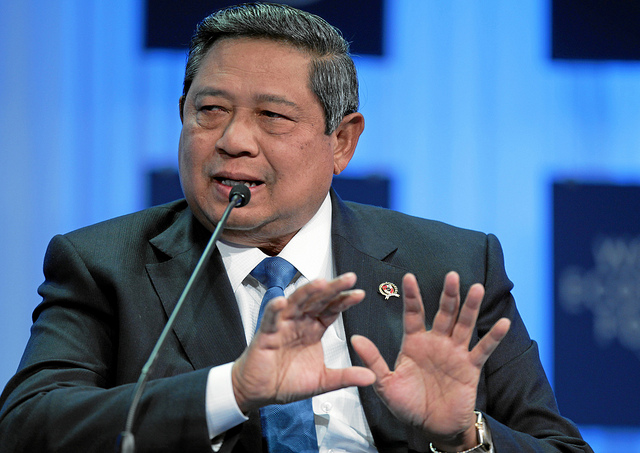
Indonesia’s President has vowed to dedicate the last three years of his administration to safeguarding his nation’s rainforests - a pledge that received broad support at a major conference in Jakarta.

Hosted by the Center for International Forestry Research (CIFOR), the conference provided a platform for 1,000 leaders of Indonesia’s government, business community and civil society, as well as foreign donors, to discuss the future of the forests, the third-largest tropical forest in the world.

“I will continue my work and dedicate the last three years of my term as President to deliver enduring results that will sustain and enhance the environment and forests of Indonesia,” Indonesian President Susilo Bambang Yudhoyono said at the conference. “If it weren’t for the benefits that our forests provide, then our way of life, our people, our economy, our environment and our society would be so much the poorer.”
“Our success in managing our forests will determine our future and the opportunities that will be available to our children.”

Indonesia is losing about 1.1 million hectares of its forests each year. Most of it is due to unsustainable logging that includes the conversion of forests to plantations for palm oil and the pulp and paper industry. It is also partly due to large-scale illegal logging, which is estimated to cost Indonesia about $4 billion annually.
“We must change the way we treat our forests so that they are conserved even as we drive hard to accelerate our economic growth,” the President said. “I do not want to later explain to my granddaughter Almira that we, in our time, could not save the forests and the people that depend on it. I do not want to tell her the sad news that tigers, rhinoceroses, and orangutans vanished like the dinosaurs.”

In his speech, the president reiterated a 2009 pledge to cut Indonesia’s greenhouse gas emissions by up to 41 percent from business-as-usual levels by 2020 – a vow only achievable if the forests are safeguarded.
Globally, deforestation accounts for up to 20 percent of greenhouse gas emissions. In Indonesia, however that figure is up to 85 percent, Yudhoyono said. This makes the country one of the highest emitters in the world.

Norway has committed up to US$1 billion to help Indonesia meet its emissions reduction target, and in May this year the Indonesian government issued a two-year moratorium on new forestry concessions.
“Norway is proud of the partnership with Indonesia,” Erik Solheim, Norway’s Minister for the Environment and International Development, said at the conference. “We strongly encourage other countries to support the work that President Yudhoyono and the government of Indonesia is doing to reduce greenhouse gas emissions. President Yudhoyono is now one of the foremost statesmen leading the international fight to combat climate change.”

It is predicted that up to US$30 billion could flow from developed to developing countries each year to help facilitate significant reductions in deforestation, and Indonesia could potentially claim a significant share of these funds through REDD+, a global mechanism for Reducing Emissions from Deforestation and forest Degradation, as well as the conservation and sustainable management of forests, and the enhancement of forest carbon stocks.

Indonesia is one of the countries with the most REDD+ demonstration activities in various stages of development, and Indonesia has been an early participant in various bilateral and multilateral initiatives to prepare for REDD+ implementation at the national level.

In addition to potential funding opportunities through REDD+ in coming years, Indonesia has a range of options available to reduce the pace of deforestation, while at the same time expanding agricultural production to guarantee food security targets and promote economic growth.
This includes focusing future agricultural development on so-called degraded land, rather than clearing rainforest to make way for plantations or developing carbon-rich peatland. The government could also support a push for agricultural intensification – increasing yields per hectare, which are currently relatively low.

“While there are some ‘win-win’ opportunities to reconcile forest management to meet both global and domestic objectives, there will also be some trade-offs that will require leadership from government, business, and civil society to determine the best way forward for Indonesia in a manner that is transparent and fair,” said Frances Seymour, CIFOR Director General.

As part of his push to safeguard the forests, President Yudhoyono called on Indonesia’s captains of industry to adopt more sustainable forests management practices.

“I call upon our business leaders, particularly those in the palm oil, pulp wood and mining sectors, to partner with us by enhancing the environmental sustainability of their operations,” the President said. “I ask you to join me in pledging to safeguard this national treasure for the sake of our children.”
The President’s pledge received widespread support from conference attendees.

“I am pleased to be here at the Forests Indonesia Conference because the UK recognizes the importance of climate change in Indonesia. We are pleased to be supporting the government of Indonesia’s work to meet its internationals climate change commitments,” said Jim Paice, UK Minister of State at the Department for Environment, Food and Rural Affairs.

##############
Transcript of the President’s speech.
SPEECH BY PRESIDENT
SUSILO BAMBANG YUDHOYONO
FORESTS INDONESIA CONFERENCE:
ALTERNATIVE FUTURES TO MEET DEMANDS FOR FOOD, FIBRE, FUEL AND REDD+
SEPTEMBER 27, 2011
SHANGRI-LA HOTEL, JAKARTA
Your Excellencies Minister Erik Solheim [ei-rik sul-haim] of Norway, and Minister Jim Paice [jim peis] of the United Kingdom,
Your Honour Mrs Frances Seymour [fransis seimor], the Director General of CIFOR,
Excellencies Ministers and Ambassadors,
Chiefs of International Organizations,
Distinguished Guests,
Ladies and Gentlemen,
First of all, let me begin by welcoming all of you to this important Conference.
It is indeed an honour and pleasure for me and my Government, to be part of this important meeting. The theme of this conference, “Forest Indonesia: Alternative futures to meet the demands for food, fuel, fiber and REDD+” is very relevant and timely.
For Indonesia, like many other countries blessed with tropical forests, are facing the challenge of sustainably managing its vitally important forest resources.
Hence, let me congratulate the organizers, CIFOR and their partners, for bringing together—under one roof—forest stakeholders, from all over Indonesia and the world. We have among us government officials and representatives of NGOs, civil society as well as the business and academic communities.
We may have different backgrounds, but we all have known the pleasure of resting in the cool shade of a tree.
It would be nice if one day we could organize a conference like this in the open air, protected from the heat of the sun, by the green crown of sturdy trees.
I am glad that this Conference discussion and its outcome will be shared online by audiences worldwide—including the forthcoming COP-17 in Durban, South Africa. This will be an excellent opportunity for us to stress on the importance to walk the talk, and not just talk the talk.
On my part, I will continue my work and dedicate the last three years of my term as President, to deliver enduring results that will sustain and enhance the environment and forests of Indonesia.
Distinguished Guests, Ladies and Gentlemen,
Exactly six months ago, in this same hotel, I spoke before the participants to the Business for the Environment Conference, or B4E conference. During that meeting I dared the business world to think innovatively—to create a balance between gaining economic benefits and ensuring the preservation and sustainability of the global environment.
The aim of today’s meeting, logically, is to build upon the discussions held last April and re-affirm Indonesia’s pioneering role in harnessing forestry to the global effort to address climate change.
Indeed, forests are so dear to my heart, and I am sure all of you also hold it close to your hearts. Forests are so precious because in the first place, if it were not for their air-filtering trees, we would all be breathing in polluted air and living in a much hotter world.
If it weren’t for the shelter and food that forests provide, we would have scarce if any biodiversity at all. And the wonders of the animal world such as the Sumatran tiger, the rhinoceros and the orangutan would have gone extinct a long time ago.
And most importantly, if it weren’t for the benefits that our forests provide, then our way of life, our people, our economy, our environment and our society would be so much poorer.
Hence, the core of my message today is that our success in managing our forests will determine our future and the opportunities that will be available to our children.
And yet, our forests remain under tremendous pressure.
Globally we are facing the challenges of climate change and environmental degradation. Global warming increasingly threatens our livelihood and even our very survival. On top of that, because we are facing another global financial crisis, nations may lose vigour in meeting their environment-related commitments.
As a developing nation, we prioritize the promotion of growth and the eradication of poverty. But we will not achieve these goal by sacrificing our forests. We must attain both development and the management of our forests– simultaneously.
This is because forest management is tightly intertwined with the livelihood of our people, with our food security, with the availability of wood and fuel. It is also closely linked with climate change.
Therefore we need to take bold initiatives through close collaboration and partnership with all stakeholders.
We must change the way we treat our forests, so that they are conserved even as we drive hard to accelerate our economic growth. We must intensify our efforts to cut down emissions from land use, land use change and forestry exploitation. These factors account for up to 85 percent of Indonesia’s entire greenhouse gas emissions.
I do not want to later explain to my granddaughter Almira, that we, in our time, could not save the forests and the people that depends on it. I do not want to tell her the sad news that tigers, rhinoceroses, and orangutans vanished like the dinosaurs.
And I am sure that none of you would want to deliver such grim news to your children and grandchildren. I am sure that you all want to see that those forests will still be there several decades from now—fascinating us with their beauty and the mysteries they hold. And still providing economic benefits while help stabilize the climate of planet Earth.
And I am also sure that you would like these forests to become our precious legacy for our children.
Ladies and Gentlemen,
Let me now bring up a few questions that are relevant to your discussions in this meeting.
First, at the global level, what would Indonesia’s sustainable forests management efforts mean?
Indonesia’s tropical forests are the third largest in the world – and they are central to our economy, environment and society. Our forests host roughly 12 percent of the world’s mammals, 16 percent of its reptiles and amphibians and 17 percent of all bird species. Over 10,000 species of trees have been recorded across the archipelago. Each year many new species are discovered in Indonesia. This biological gift is intertwined with the rich cultural diversity of Indonesia’s forest.
Forests are the lynchpin to our biodiversity. They are home to bees, bats, birds, insects and other pollinators of the crops we plant. They also help regulate the quality and availability of water for irrigation. Forests provide foods, including seeds, leaves, fruits, roots, gums, mushrooms, and habitat for animals.
Indonesia, home to the third largest tropical forests in the world, views itself as the custodian of these great green treasures; and I want to keep it that way. So we are gathered here to deal collectively with those challenges to our forests.
My next question is then, why is sustainable forest management so important to Indonesia?
The first reason is food security. Indonesia’s 238 million citizens are under pressure of rising commodity prices. The Government of Indonesia is pursuing a programme to increase agricultural and forest productivity, particularly through the cultivation of critical and idle lands. In this regard, we have selected centers of rice production in several provinces throughout Indonesia. Indeed, the sustainability of forests is crucial to an abundant rice harvests.
Secondly, in the area of energy security, our forests are home to potential sources of energy such as micro-hydro, geo-thermal, and bio-energy. We are increasing the portion of alternative sources of energy in our energy-mix. Forest ecosystems offer competitive advantage by making possible the replacement of conventional fuels by renewable energy sources.
Thirdly, Indonesia is a major supplier of fiber. Indonesia’s land availability and the fast-growth of many tree species, supported by favorable tropical climate, have also increased the economic value of our forests.
Fourthly, forests make the terrain more resistant to landslides that threaten many communities. They are vital to efforts at mitigating and adapting to climate change, the impact of which is now being felt all over our archipelago and the rest of the world.
Also, our mangrove forests—the largest in the world—can protect coastal communities from the devastation that can be inflicted by storms and tsunamis. Moreover, mangrove forests serve as nurseries to many fish species that are of great commercial importance—and also crucial to our food security.
Lastly, through our efforts at reducing CO2 emissions, Indonesia can make a significant positive impact on the climate situation. In this regard, although our peat swamp forests are the largest in the world, they have suffered degradation. That has greatly diminished their capacity to reduce CO2 emissions. Restoration is therefore essential.
Hence, it is clear that Indonesia’s forests are of immense value. They offer us a lot of opportunities and benefits.
We therefore need to go into partnership with all stakeholders to sustainably manage our forest resources.
Ladies and Gentlemen,
To ensure the sustainability of our forests while still meeting our development objectives, my Government has given priority to a set of policies and actions to safeguard our forests and ensure their sustainable management.
I made a pledge at the G-20 Summit in Pittsburgh that we in Indonesia will voluntarily reduce our greenhouse gas emissions by 26 percent from business-as-usual levels by 2020. Since then, my Government has carried out many initiatives.
In 2010, we signed a Letter of Intent with the Government of Norway to cut emissions by reducing deforestation and forest degradation. This is known as REDD Plus–a concept that was launched in Bali in 2007.
In May this year, I instituted a two-year moratorium on new licenses to exploit natural primary forest and all peat lands. About two weeks ago, I signed a Decree outlining more than 70 self-funded government programs. This is a demonstration of our commitment to reduce by 26 percent our projected emission in 2020 under a business as usual scenario.
These are groundbreaking steps, but they are not goals in themselves. They are simply measures that give us time and resources, to review and revise land use policy and practice. They also provide opportunity to develop a new sector in our economy—through ecosystem restoration concessions for carbon sequestration and emission reduction.
Apart from the moratorium, we have built indicative maps that are important to the implementation of REDD Plus, and to the formulation of wise policies related to forests. These maps will also facilitate the resolution of decades-long problems of land use and land tenure.
I have also signed a Decree to set up a Task Force for the establishment of a REDD+ agency as stated in the Letter of Intent. We are also developing a national strategy on REDD Plus. The strategy includes elements such as the establishment of REDD+ institutions, the formation of relevant financial mechanisms, monitoring and benefit-sharing. To this end, and to meet the REDD+ expected targets, global funding is necessary.
I am happy to inform you that there are now more than 40 REDD Plus pilot or demonstration projects across Indonesia. This makes us a pioneer in creative ways to address climate change. It also provides us with research insights that will enrich our discussions today, and at the forthcoming global negotiations in COP17 in Durban, South Africa.
Another initiative of ours is the Forest Eleven Forum that we launched four years ago, which has brought together major tropical forest countries. My Government has also pursued bilateral forestry cooperation with several countries.
In the light of international enthusiasm for sustainable forest management, our local stakeholders must also take an active role in this field. I call upon our business leaders, particularly those in the palm oil, pulp wood and mining sectors, to partner with us by enhancing the environmental sustainability of their operations.
Still another initiative is the provision of funding for small and medium enterprises run by forest-edge inhabitants, micro finance programmes for the rural poor and for women, and Local Development Projects (PNPM) for local villages.
At the grassroots level, we have also launched a massive campaign programme to plant one billion trees nation-wide annually
It is said that “an apple a day keeps the doctor away.” I would like to say: “A billion trees a year shield the world’s lungs from decay.”
Ladies and Gentlemen,
Despite our modest achievements, I am mindful that these efforts will only take us part of the way towards our emission reduction target.
A long journey still awaits us. We know we must do more, to address the primary sources of our greenhouse emissions, such as illegal logging, forest encroachment, forest and land fires, and peat land drainage. And indeed we are working hard and comprehensively to overcome these challenges.
At the same time, we are mainstreaming all these perspectives and commitments into a special development framework. Our endeavours to effectively protect the environment are reflected in a special 15-year Master Plan to accelerate and expand our economic development. This means that sustainable development is part and parcel of our efforts to boost Indonesia’s economy, so that it will become the 12th largest economy by 2025.
This meeting is of great value to Indonesia. It is a contribution to global efforts at protecting forests and to the advance of the climate change discourse. I am especially pleased to see many business leaders here today because they bring decades of experience to the table, and help to shape the future of our nation’s forests. I encourage all of you to forge greater cooperation with international partners.
I ask you to join me in pledging to safeguard this national treasure, for the sake of our children.
As I mentioned earlier, Indonesia, as custodian of one the largest tropical forests of the world, will continue to maintain a pro-environment growth strategy.
The task before us today is to chart a sustainable future for our forests and meet our development objectives. This is not an easy task. But we will pay a much higher price if we do not take up the challenge. By working hard together, we can help guarantee the future of our forests. And the future of our children and grandchildren.
That future begins now.
I thank you
Wassalamualaikum Warahmatullahi Wabarakatuh

Source : http://blog.cifor.org

Asean urges Indonesia to sign pollution pact

Asean members are calling on Indonesia to ratify the grouping's Transboundary Haze Pollution agreement in a bid to control the impact of air pollution caused by forest fires.

"The Indonesian government has postponed the ratification of this agreement several times already. It should sign up because this collaboration will help Asean countries deal with the pollution cause by forest fires, especially in Indonesia," Supat Wangwongwattana, director general of the Pollution Control Department, said.

Supat was speaking at the Subregional Ministerial Steering Committee's 12th meeting on Transboundary Haze Pollution held in Bangkok yesterday. Also present at the meeting were several senior environment officials from other countries in the region.

"We have sent many official letters to the Indonesian government asking them to control the haze caused by forest fires, but there has been no formal response from the authorities. Hence, we do not have any answers for our people," Supat explained.

In 2006, more than 29,000 hotspots were detected in Indonesia, and though the number dropped to 8,000 in 2010, it rose again to 17,000 this year.

Every year, during the months of August and September, four provinces in the South of Thailand are covered in smoke from Indonesian forest fires, causing respiratory problems among the residents.

Arief Yuwono, from the Indonesian Environment Ministry's Degradation Control and Climate Change, told the meeting that his government had implemented a plan to deal with haze pollution, which included the prevention and control of forest and land fires. The government has also strengthened lawenforcement measures and will conduct a zeroburning campaign, he said, adding that new laws on plantation, environment and forestry would be enforced among relevant stakeholders.

Source : http://news.asiaone.com

HAPPINESS ALWAYS

SECRET OF WOMAN